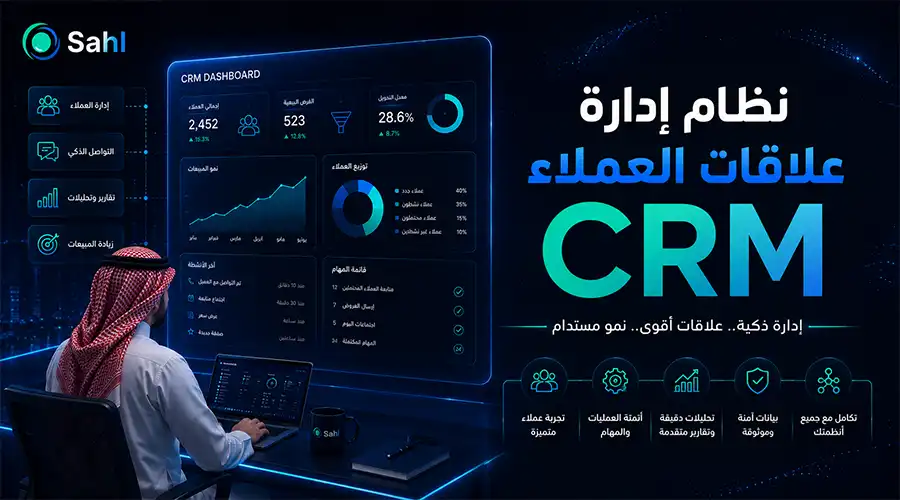


With the rapid digital transformation across Saudi Arabia and rising customer expectations, companies increasingly need intelligent solutions to organize customer data and streamline communication. This is where understanding what a CRM system is becomes essential, as it stands among the most vital tools organizations rely on to manage customer relationships with greater efficiency. Gathering customer data haphazardly or relying on manual follow-ups is no longer sustainable. Today’s business success depends on understanding customer needs and delivering exceptional experiences that build brand trust and retention. In this article, we explore what a CRM system is, its core functions and advantages, the key beneficiaries, the various types of CRM software, the difference between CRM and ERP, and how choosing the right system can drive your business growth. For anyone asking what a CRM system is: CRM stands for Customer Relationship Management. It is a strategic and technological solution designed to collect, organize, and manage all company interactions and data with both prospective and existing customers within a single centralized platform. Understanding what a CRM system is goes beyond viewing it as a simple digital database; it functions as an interactive engine recording every detail of the customer journey—from initial lead capture and communications to closed deals and post-sale support records. Looking for a customized CRM system to manage and grow your customer relationships, automate follow-ups, and track deals? Contact Sahl Tech via WhatsApp at +966533879965, email us at support@sahltechit.com, or fill out the contact form on our website to start scaling your business today! CTA Understanding what a CRM system is highlights its role in structuring customer management and optimizing business operations across several direct applications: Managing and Tracking Sales Deals: Following up with every prospective lead step-by-step from initial contact through deal closure. Aggregating and Organizing Customer Data: Storing customer contact details, communication histories, and purchases in one easily accessible hub. Automating Marketing Campaigns: Sending promotional messages and tailored offers automatically based on customer interests and purchasing behaviors. Support Ticket and Complaint Management: Logging customer inquiries and converting them into actionable support tickets assigned to the right team members for rapid resolution. Team Task Distribution and Management: Assigning tasks and follow-ups automatically across sales and technical support teams to prevent operational bottlenecks. Generating Real-Time Forecasts and Reports: Analyzing data in real time to provide leadership with clear visibility into sales pipelines and representative performance. Upselling and Cross-Selling: Recommending upgrades or complementary products based on prior buying history to boost customer lifetime value. With Sahl Tech, managing customer relationships becomes seamless and professional. Contact us today to learn how our systems can elevate your data organization and client outreach! CTA A top-tier CRM system, such as the solutions delivered by Sahl Tech, provides essential capabilities to automate workflows and elevate the customer experience: Contact Management: Centralizes comprehensive customer details (names, phone numbers, interaction logs, and purchase histories) in an accessible database. Sales & Lead Management: Tracks sales opportunities across all pipeline stages, distributes tasks, and automates lead nurturing to maximize conversion rates. Marketing Automation: Delivers targeted email and advertising campaigns based on customer behavior and tracks overall campaign performance. Customer Support: Manages technical support tickets, inquiries, and complaints to ensure swift resolutions and high customer satisfaction scores. Analytics & Reporting: Generates detailed reports on sales velocity, employee productivity, and customer response trends to support data-driven decision-making. A CRM system serves as an operational foundation for enterprise growth, providing businesses with tighter control over daily workflows and client engagement: Centralized Data Hub: Unifies customer records across departments so sales, marketing, and support work from a single source of truth. Higher Sales Velocity and Conversions: Streamlines pipeline tracking and structured follow-ups to close deals faster. Enhanced Customer Satisfaction and Loyalty: Delivers fast, personalized service based on historical context, reinforcing customer loyalty. Routine Task Automation: Minimizes manual administration by automating reminders, follow-up emails, and task assignments. Seamless Cross-Departmental Collaboration: Aligns marketing, sales, and support teams to eliminate duplicate efforts and keep communications coherent. Data-Driven Strategic Insights: Delivers real-time dashboards detailing pipeline volume, market trends, and team performance. Ready to scale your operations, boost sales, improve UX/CX, and explore what a tailored CRM system can do? Start your digital transformation with Sahl Tech today via WhatsApp at +966533879965, email at support@sahltechit.com, or submit your inquiry online! CTA Implementing a CRM system helps organizations manage relationships systematically, streamline internal procedures, and extract actionable value from business data: Elevating Customer Experience: Tailors services and offers directly to customer expectations. Organizing Customer Information: Consolidates fragmented data to accelerate retrieval and account servicing. Boosting Sales Efficiency: Empowers sales reps to prioritize hot leads and manage pipelines effectively. Enhancing Communication: Facilitates faster, more accurate replies across multiple touchpoints. Fostering Brand Loyalty: Builds long-term client relationships through personalized interactions. Analyzing Consumer Behavior: Unlocks behavioral patterns to refine marketing strategies and product offerings. Increasing Workforce Productivity: Frees up employee time by eliminating repetitive administrative tasks. Uncovering New Revenue Opportunities: Identifies viable cross-selling and upselling triggers within existing customer portfolios. Empowering Leadership Decisions: Supplies executive teams with reliable data for long-term planning. Improving Customer Retention: Delivers proactive support to reduce churn and protect recurring revenue. If you need a system to streamline client management and elevate team performance, reach out to Sahl Tech for advanced CRM solutions tailored to your growth goals. While a CRM system is the technical platform used to manage data and interactions, Customer Experience (CX) represents the holistic perception a customer forms during their interactions with the brand. Cloud-based CRM solutions leverage web infrastructure to handle customer relations through a structured operational loop: Centralized Cloud Storage: Stores all client data (contacts, purchase records, interaction logs) on secure servers accessible from any device or location. Automated Omnichannel Integration: Connects directly with your website forms, email, WhatsApp, social channels, and VoIP systems to capture touchpoints automatically. Sales Pipeline Management: Categorizes leads and tracks deal progression across distinct pipeline stages so reps always know the immediate next action. Automated Workflow Triggers: Executes recurring background tasks such as sending welcome notes, assigning tasks, or scheduling check-ins. Ticketing & Support Queues: Converts incoming inquiries into tracked tickets routed to the correct agent for fast resolution. Instant Analytics & Dashboards: Generates visual dashboards tracking sales revenue, SLA compliance, and conversion rates. Continuous Updates & Security: Managed cloud providers handle encryption, daily backups, and software patches without local server overhead. Want to upgrade your customer management infrastructure? Contact Sahl Tech for cloud CRM setups designed to improve pipeline visibility and drive revenue. Customer Data Management: Consolidates contact profiles and historical notes into a searchable database. Interaction Logging: Tracks calls, emails, and notes to preserve full conversational context. Sales Pipeline Tracking: Monitors opportunity stages to increase closing velocity. Workflow Automation: Handles recurring administration and reminder schedules automatically. Lead Scoring & Routing: Qualifies leads and directs them to suitable sales representatives. Comprehensive Reporting: Delivers visual KPIs to measure rep performance and revenue health. Customer Support Enhancement: Accelerates inquiry resolution with unified ticketing tools. Third-Party Integrations: Connects with accounting software, ERPs, email clients, and website forms. Sales Team Management: Facilitates quota assignment, workload balancing, and tracking. Segmented Marketing: Runs targeted campaigns mapped to explicit customer traits. Cloud Accessibility: Grants secure access across mobile and desktop devices. Contact our CRM specialists at +966533879965, email support@sahltechit.com, or request a consultation on our website to tailor the right solution for your enterprise. CTA Sales Teams: Automates deal tracking, pipeline visibility, and stage progression. Marketing Teams: Leverages audience segmentation to deploy high-converting campaigns. Customer Support & Service: Accelerates inquiry turnaround times and preserves case histories. Executive Leadership & Stakeholders: Delivers high-level forecasting and reporting for strategic planning. Small and Medium Enterprises (SMEs): Organizes business communications efficiently without enterprise overhead. Large Enterprises: Coordinates large databases across matrixed departmental structures. Project Management Teams: Tracks client requirements, timelines, and deliverables. E-commerce Stores: Analyzes customer cart behaviors, lifetime spend, and post-purchase follow-ups. Service Sectors (Healthcare, Education, Consulting): Centralizes client consultations, records, and ongoing appointments. Looking to choose the right CRM model, connect WhatsApp, or integrate website forms? Connect with the Sahl Tech team via WhatsApp at +966533879965, email support@sahltechit.com, or reach out online! CTA A CRM platform centralizes disjointed business data into structured, automated workflows through the following steps: Data Collection & Centralization: Captures incoming lead data across web forms, chat channels, calls, and email into unified profile records. Sales Pipeline Management: Guides prospective leads through defined deal stages (qualification, proposal delivery, negotiation, closing). Workflow Automation: Triggers notifications, assigns reps, and schedules follow-up cadences without manual intervention. Customer Support & Ticketing: Equips service teams with comprehensive customer account histories the moment an issue is raised. Reporting & Analytics: Processes raw interaction data into visual dashboards detailing conversion rates, revenue generation, and team output. Deeper Behavioral Insights: Uncovers customer purchasing habits and preferences to tailor commercial proposals. Higher Sales Team Efficiency: Reduces manual administrative work so reps focus on closing active deals. Accelerated Revenue Growth: Prevents lost opportunities through automated prompts and timely lead nurturing. Confident, Data-Backed Decisions: Provides leadership with accurate forecasting metrics and operational data. Unified Departmental Collaboration: Eliminates data silos between marketing, sales, and support. While a CRM focuses primarily on managing customer acquisition and post-sale relationships to grow top-line revenue, an Enterprise Resource Planning (ERP) system manages back-office operations, inventory, and resource allocation. Ready to scale your sales operations with a smart CRM setup? Contact Sahl Tech via WhatsApp at +966533879965, email support@sahltechit.com, or register on our site to implement an optimal CRM architecture! CTAWhat Does CRM Stand For?
CRM System Use Cases
Core Functions of a CRM System
Features and Benefits of a CRM System
Key Objectives of a CRM System
Difference Between CRM Systems and Customer Experience (CX)
How Cloud CRM Services Operate
Key Features of a CRM System
Key Beneficiaries of a CRM System
Types of CRM Systems
How a CRM System Works
Why Your Company Needs a CRM System
Difference Between CRM and ERP
Frequently Asked Questions